Strategy
The Biggest Mistake First-Time Property Investors Make: Opportunity Cost
Most first-time investors already have the money. It's sitting in a savings account, earning next to nothing, while they wait for the "right moment" that never quite arrives. Here's what that hesitation actually costs — in real numbers.
I've sat across the table from a lot of first-time investors. Different jobs, different budgets, different fears. But almost all of them make the same mistake.
They wait.
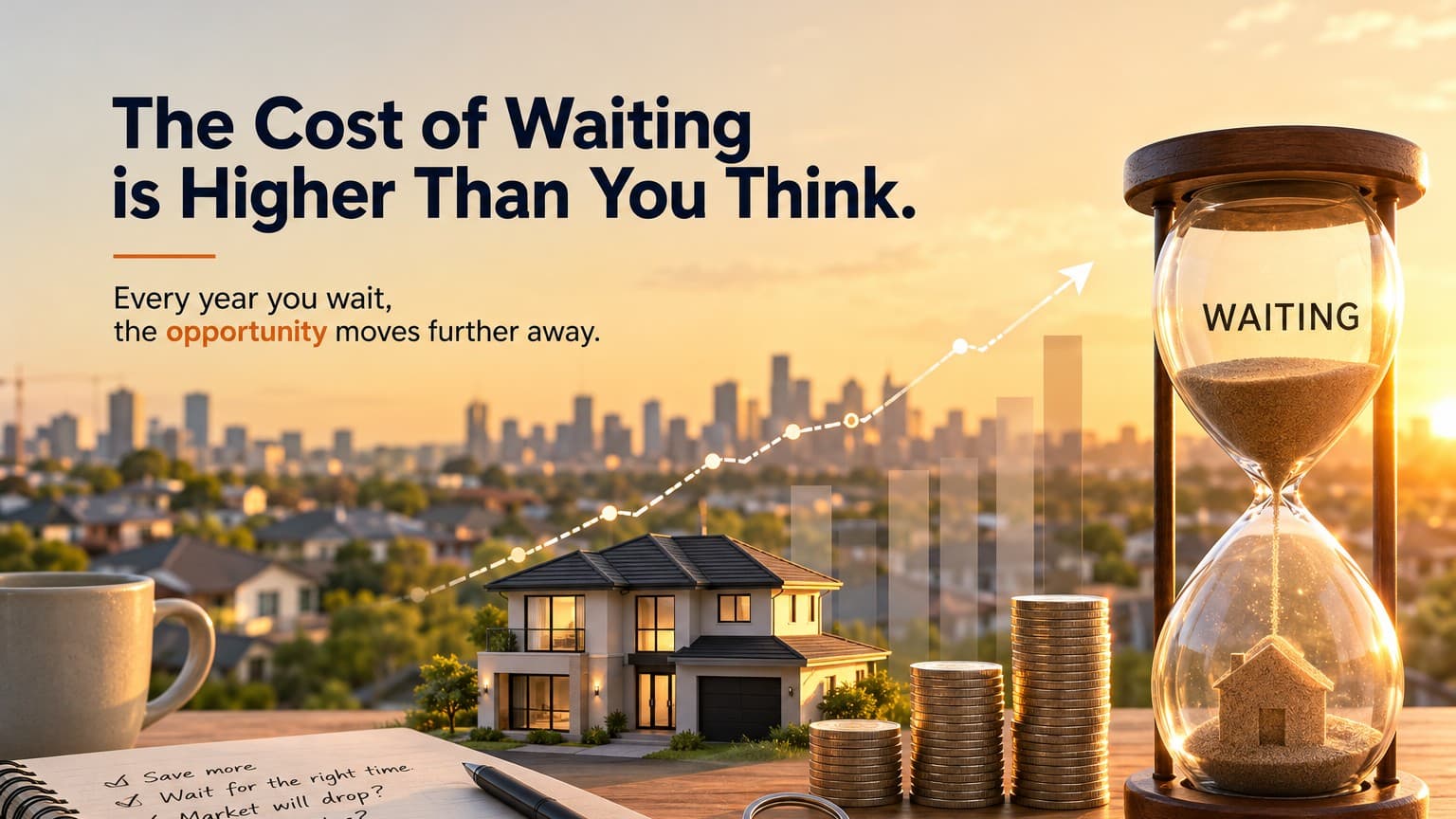
Most of them actually do have the money — sitting in a savings account or offset account, earning next to nothing — while they try to talk themselves into the "right" moment to buy. The problem is that while they're waiting, property prices are growing, and that's the opportunity cost: a missed $10,000–$20,000 that disappears simply by not acting sooner.
What waiting actually costs you
Property prices don't pause while you're deciding.
Moving averages across Australian property markets increase every year, regardless of interest rate cycles or news headlines. In real numbers, that's an extra $10,000 to $40,000 added to your deposit requirement — depending on the region — for every twelve months you hold off. Wait because you "want to be sure," and you might need tens of thousands more just to get back to where you started.
You're not just competing with the market — you're competing with more buyers
There's a second pressure most first-time investors don't see coming: the buyer pool is growing.
University graduates are entering the market earlier than they used to. Younger buyers now have far more access to data, financial literacy resources online, and less hesitation about investing straight out of study. Every year you wait, you're not just paying more — you're competing with more people for the same properties.
Why the numbers freeze people instead of moving them
The hesitation is understandable. A six-figure deposit isn't like booking a car or a holiday. It's hard to picture what your life looks like on the other side of that decision, and that uncertainty keeps a lot of people stuck.
But staying stuck has a cost too. Everyone eventually moves into the next stage of life — career, marriage, family — and in Australia, that stage typically involves property. The question isn't whether you'll invest. It's whether you'll do it on your terms, or three years later than you wanted to, after the market has already moved past you.
The best time to look at your first investment property isn't after you feel completely ready. It's while you still have the maximum runway to build equity.
Interest rates aren't the real obstacle
A lot of people point to interest rates or global uncertainty as their reason to wait. That reasoning doesn't hold up under scrutiny.
Run the numbers through a proper cash flow calculator first. Understand your serviceability — what happens to your monthly repayments if rates shift by another half a percent. Once you know that number, the broader macro picture stops being a reason to freeze.
Wars end. Rate cycles turn. Three years from now, the headlines that feel urgent today won't matter to your equity position. What will matter is whether you started.
| What changes | Waiting 12 months | Acting now ✓ Recommended |
|---|---|---|
| Deposit requirement | ||
| Equity building | ||
| Buyer competition | ||
| Interest rate risk |
Figures are illustrative, based on average annual price growth across Australian investment-grade markets. Individual results vary by region and timing. General information only — not personal financial advice.
What changes when you stop going it alone
This is where most solo investors get stuck without fully realising it. Without the right data subscriptions or direct relationships with agents, you end up comparing one property for a week, hoping it's the right one.
With the right support, you're comparing twenty to thirty properties at once — and walking away with the best of that group, not just the first one that didn't scare you off.
That comparison is the difference between an emotional decision and an objective one. Our investment property service runs a 42-benchmark suburb analysis before a single property is shortlisted — the same rigour that found the regional QLD home that grew from $391,000 to $582,000 in two years.
If you'd prefer to understand the owner-occupier path first, or you're exploring options through an SMSF structure, we model both scenarios using your actual numbers.
Don't wait
If there's one piece of advice worth repeating, it's this: don't wait for certainty that isn't coming. Get the free suburb data for your budget. Run your numbers. Understand exactly what your $100,000 in savings turns into two years from now — with and without action.
Once you can see that gap clearly, the decision usually makes itself.
If you've been sitting on savings and wondering where to start, we'll run the numbers with you — no pressure, no guesswork. Talk to Prime Pursuit Properties about your next step, or browse more articles on property strategy to build your foundation first.
Frequently asked questions
How much does waiting 12 months actually cost me?
In most Australian growth markets, median property prices rise by roughly $10,000 to $40,000 per year depending on location. That means your deposit requirement grows by the same amount — on the same salary — without any change in your savings rate. The free strategy session is the fastest way to model your specific numbers.
What if interest rates are still high when I buy?
Rate cycles are temporary; property equity is permanent. The key is understanding your serviceability before committing — what your monthly repayments look like if rates move half a percent either way. Our investment property process includes a full cash flow analysis so you enter any purchase with eyes open, not guesswork.
Should I buy a home to live in first, or an investment property?
That depends heavily on your location, income, and lifestyle goals. Many buyers find that a rentvesting approach — renting where you live while purchasing an investment property in a higher-growth market — gets them into the market sooner and builds equity faster. Read our full breakdown: What is rentvesting? The strategy first home buyers are missing.
How do I know which suburb to buy in?
The right suburb depends on supply-demand dynamics, infrastructure spend, population growth, rental vacancy rates, and the land-to-asset ratio — not just price. Our process scores every suburb across 42 benchmarks before a property is shortlisted. See how our investment property service works, or visit our FAQs page for more on suburb selection.
This article is general information only and does not take into account your personal financial situation, objectives, or needs. It is not financial, tax, or legal advice. Property market figures and case study references are illustrative and not indicative of future returns. Please seek independent financial advice before making any property investment decision.